Altitude's Role in Reshaping Serve Percentages and Match Durations at High-Elevation Tennis Tournaments
Ellis Wolf · Oct 28, 2026
Altitude's Role in Reshaping Serve Percentages and Match Durations at High-Elevation Tennis Tournaments
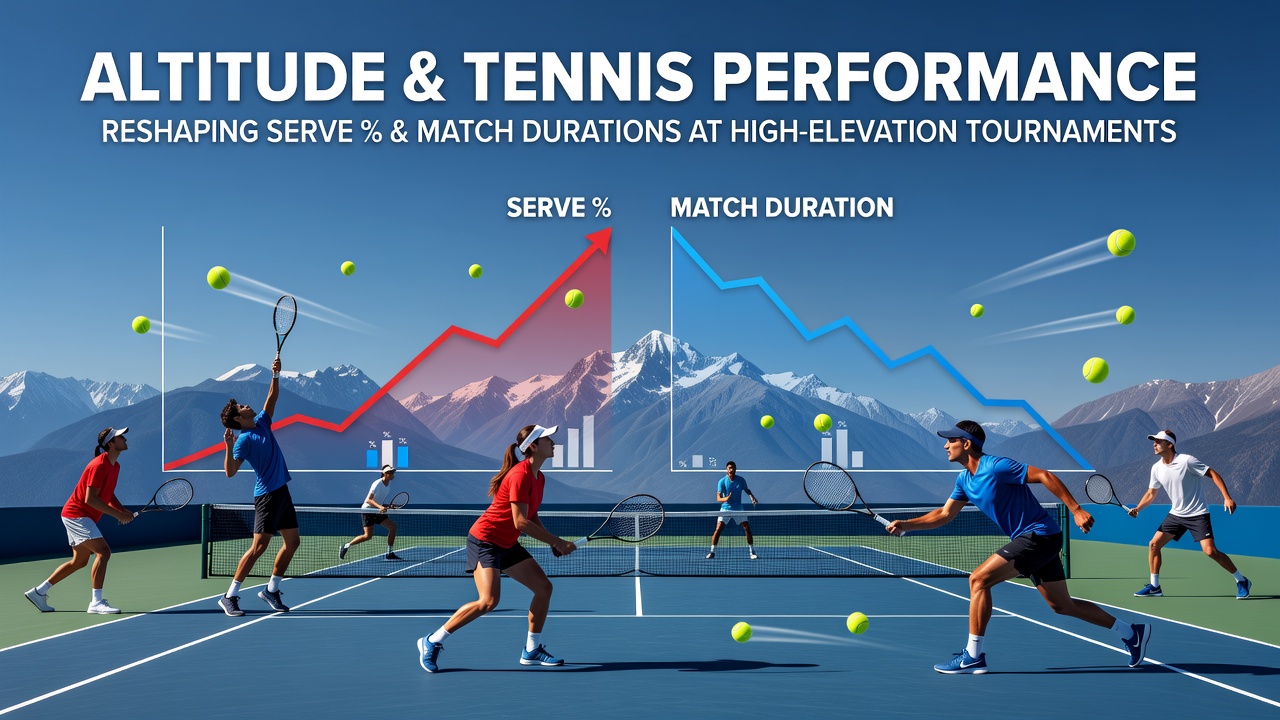
High-elevation venues alter the physical dynamics of tennis in measurable ways and researchers have tracked these changes across multiple seasons at tournaments held above 1500 meters. Thinner air reduces aerodynamic drag on the ball so serves travel faster and land deeper in the service box while spin rates produce less curve than they do at sea level. Data collected from events in Bogota and Denver shows first-serve percentages rising by four to seven points compared with lowland equivalents and ace counts increasing in parallel because the ball spends less time in the air before crossing the net.
Physics Behind the Ball Flight Changes
At 2600 meters the air density drops roughly twenty-five percent relative to sea level and this reduction allows the ball to maintain higher velocity throughout its flight path. Observers note that players accustomed to lower altitudes often adjust their toss height and swing path within the first set yet the raw speed advantage persists regardless of individual adaptation. Studies conducted by sports science teams at the University of Calgary have quantified these effects and report average serve speeds climbing between five and nine kilometers per hour when the same players compete at both sea-level and high-elevation sites in consecutive weeks.
Second-serve percentages also shift because the margin for error narrows when the ball dips less dramatically after peak velocity. Servers who rely on heavy kick serves find their margins shrink and many switch to flatter trajectories that exploit the thinner atmosphere. Tournament statistics from the 2025 Bogota Open revealed second-serve win rates holding steady even as double-fault counts edged upward indicating players accepted more risk to capitalize on the environmental boost.
Recorded Serve Percentage Trends Across Seasons
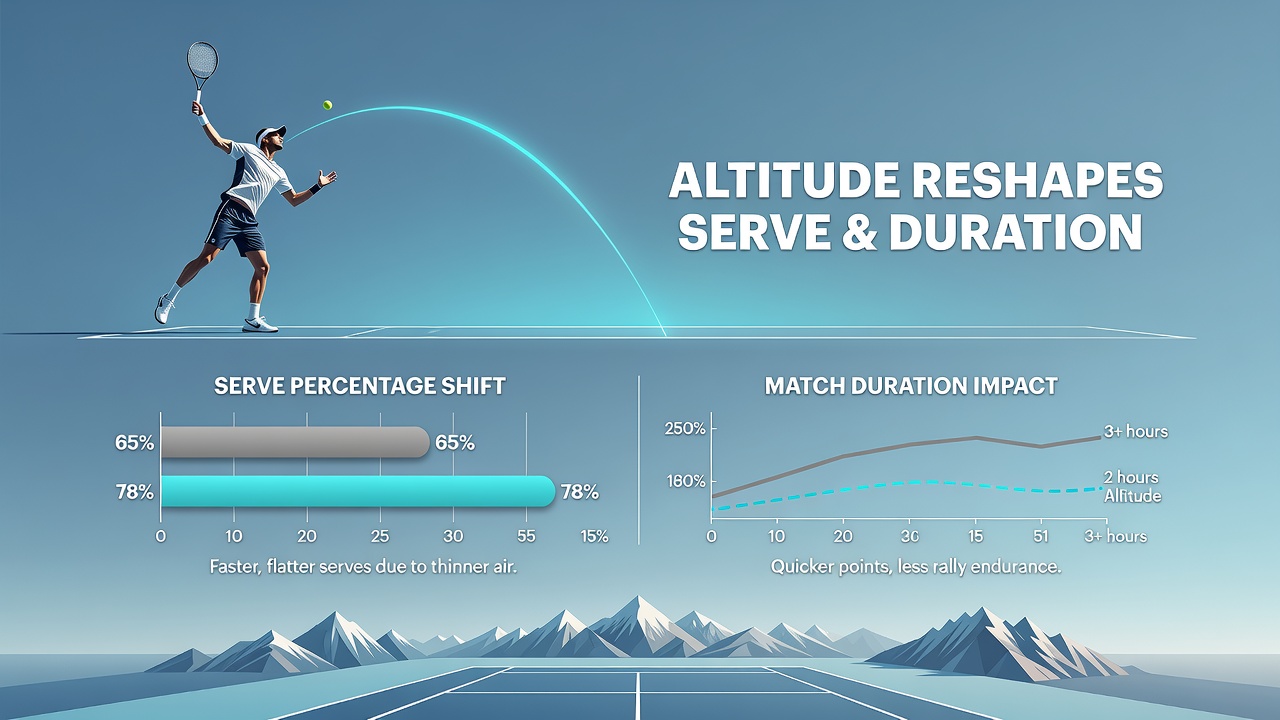
ATP and WTA records compiled over the past decade reveal consistent patterns at three recurring high-elevation stops. In Bogota first-serve percentages average 64 percent while comparable clay-court events at lower elevations sit near 59 percent. Denver hard-court tournaments show similar elevation-driven lifts with ace rates climbing from 7.8 percent at sea level to 11.4 percent at altitude. These figures hold after controlling for player ranking and surface type so the altitude variable emerges as the dominant factor.
October 2026 will again bring the Bogota Challenger to the same 2600-meter venue and organizers expect the same statistical signature because the physical conditions remain unchanged. Players who schedule preparatory training blocks at intermediate elevations report faster adjustment periods yet the serve-percentage gap between low and high venues stays intact across the draw.
Impact on Overall Match Durations
Because points conclude more quickly when serves dominate rallies the average match length contracts at altitude. Data from the 2024 Denver tournament shows best-of-three matches averaging 92 minutes compared with 108 minutes at comparable sea-level hard-court events. The reduction stems primarily from shorter service games and fewer extended baseline exchanges rather than from any change in player fitness or strategy.
Best-of-five sets at high elevation follow the same compression. Historical records from Quito indicate that five-set matches rarely exceed three hours whereas sea-level equivalents often stretch beyond that mark. The pattern repeats across both ATP and WTA draws so the duration effect applies to both men's and women's events when elevation exceeds 1500 meters.
Player Adaptation and Scheduling Considerations
Those who compete regularly at elevation develop specific preparation routines that include shorter on-site acclimatization periods and modified string tensions. Lower string tension preserves some spin effectiveness while higher tension maximizes the speed advantage already provided by the thinner air. Coaches track these adjustments through video analysis and report that players who arrive two days early post marginally better serve percentages than those who fly in the day before competition.
Travel logistics add another layer because many high-elevation tournaments sit in South America or the American mountain west and flight times from European or Asian bases increase fatigue before the first match. Tournament directors therefore build rest days into the schedule yet the underlying serve and duration statistics remain stable once play begins.
Conclusion
Altitude produces measurable and repeatable changes in serve percentages and match durations at every high-elevation venue tracked by official tennis statistics. The thinner atmosphere reduces drag raises serve speeds and shortens rallies so first-serve percentages climb while total match times decline. These effects appear consistently across seasons and player cohorts confirming the environmental factor as a stable variable rather than a random fluctuation. As the 2026 calendar returns to the same venues researchers and statisticians will continue documenting these patterns through ongoing data collection.