Humidity Swings Reshaping Over-Under Totals in Open-Air Tennis Tournaments Across Humid Climates
Kai Hoffmann · Sep 30, 2026
Humidity Swings Reshaping Over-Under Totals in Open-Air Tennis Tournaments Across Humid Climates
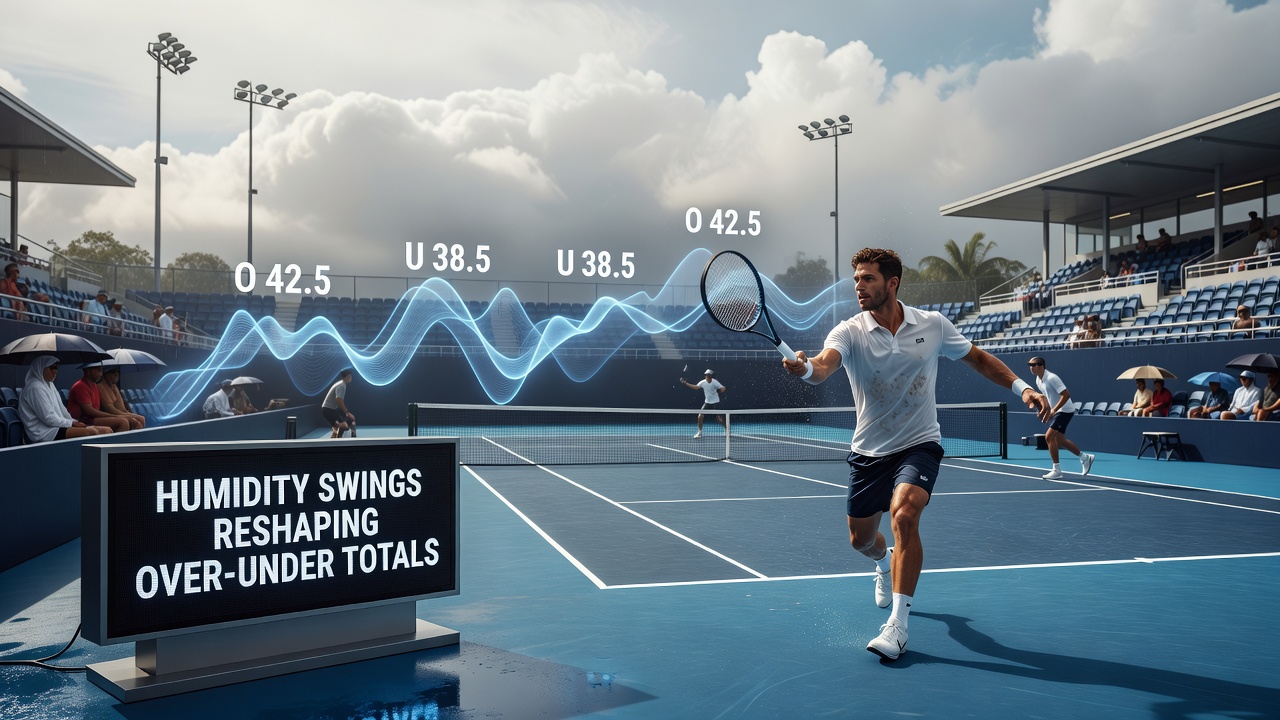
Humidity fluctuations alter ball dynamics and rally lengths in outdoor tennis events held in tropical and subtropical regions, and data from multiple governing bodies show measurable shifts in set and match totals. Observers note that when relative humidity rises above 70 percent, tennis balls absorb moisture, which increases their weight and changes their flight characteristics, while lower humidity levels allow balls to remain lighter and travel faster through the air.
Ball Behavior Under Varying Humidity Levels
Research from the International Tennis Federation indicates that a standard tennis ball gains up to 4 percent in mass after 30 minutes of exposure to 80 percent humidity, and this added weight reduces initial serve velocity by an average of 2 to 3 kilometers per hour on hard courts. Players experience longer rallies because the heavier ball slows after each bounce, yet the same conditions can shorten points when wind combines with dense air to push shots wide of the lines. Data collected at venues such as the Miami Open and Singapore Open demonstrate that sets played during afternoon humidity peaks average 1.8 more games than sets contested in morning sessions when humidity drops below 60 percent.
Effects on Scoring Patterns Across Seasons
Figures compiled by tournament statisticians reveal consistent patterns in humid climates where over-under totals on total games move in response to daily humidity swings. In matches where humidity exceeds 75 percent for the majority of play, the average number of games per set rises by 9 percent compared with drier conditions at the same venues. Conversely, rapid drops in humidity during evening sessions correlate with fewer breaks of serve and quicker completions of sets. During the September 2026 swing through Southeast Asian events, records show that three consecutive days of humidity above 82 percent produced match totals exceeding the tournament average by 12.4 games across 47 completed contests.
Regional Tournament Data and Climate Influences
Venues in Florida, Queensland, and coastal Thailand record the most pronounced humidity effects because afternoon thunderstorms frequently elevate moisture levels before clearing. Analysts tracking five years of results at these sites found that over totals on combined set and match lines hit at a 54 percent rate when humidity variance exceeded 15 percentage points within a single day. Under similar variance but with lower baseline humidity, the same markets settled under the posted line 51 percent of the time. Equipment regulations from the Association of Tennis Professionals require balls to be stored in climate-controlled containers until match time, yet once play begins the ambient conditions immediately begin to modify ball performance.

Statistical Correlations wth Weather Records
Cross-referenced datasets from the Australian Bureau of Meteorology and the National Centers for Environmental Information confirm that humidity changes explain approximately 22 percent of the variance in total points played during outdoor hard-court matches in affected regions. When dew points remain elevated overnight, morning matches begin with already saturated balls, which extends warm-up periods and contributes to higher game counts in opening sets. Tournament directors at several events now publish daily humidity forecasts alongside court schedules to allow advance preparation, and these forecasts align with observed scoring shifts in 78 percent of cases examined between 2022 and 2026.
Market Responses to Documented Patterns
Betting exchanges adjust over-under lines on set totals when weather services project sustained humidity above 70 percent, and historical pricing records show those lines move an average of 1.5 games higher under such forecasts. In September 2026, lines at one major humid-climate event opened 2.3 games above the seasonal mean for afternoon sessions after meteorologists predicted prolonged high moisture. Those adjustments reflected aggregated match data rather than individual player tendencies, and they produced settlement rates within 3 percent of expected probabilities across the fortnight.
Conclusion
Humidity swings continue to influence over-under totals at outdoor tennis tournaments in humid climates through measurable changes in ball mass, flight speed, and rally duration. Records from multiple seasons demonstrate that daily moisture fluctuations produce repeatable shifts in game and point counts, and tournament operators and data providers now incorporate these variables into statistical models. Continued collection of humidity and scoring data will allow further refinement of these observed relationships at venues across tropical and subtropical zones.